
 ENG
ENG
 English
 中文简体
中文简体 русский
 Español
 عربى
عربى
Introduction
In modern industry, construction, and home renovation, High-performance Sealants/Adhesives play an indispensable role. They not only provide strong bonding capabilities but also maintain long-term stability in high temperatures, humid conditions, and even chemically corrosive environments. With the development of material science and industrial technology, the performance of high-performance sealants/adhesives has improved significantly, and their range of applications has expanded.
This article aims to provide readers with a comprehensive guide covering high-temperature sealants, waterproof adhesives, industrial sealants, structural adhesive applications, and silicone sealant performance, helping you fully understand the selection, usage, and performance evaluation of high-performance sealants/adhesives.
1. What are High-performance Sealants/Adhesives
1.1 Definition and Features
High-performance Sealants/Adhesives refer to sealants and adhesives that maintain excellent performance under extreme conditions. Compared with ordinary sealants, they have the following features:
- High bonding strength: They provide reliable adhesion even between different materials.
- Strong environmental resistance: They resist temperature changes, humidity, UV radiation, and chemical corrosion.
- Elasticity and durability: They maintain sealing performance during material expansion and contraction, preventing cracks and leaks.
- Versatility: Applicable in construction, automotive, electronics, aerospace, and multiple industries.
1.2 Differences Between High-performance and Ordinary Sealants
Ordinary sealants typically only provide basic adhesion or waterproofing, suitable for low-load, low-demand applications. In contrast, High-performance Sealants/Adhesives not only offer higher bonding strength but also meet industrial-grade requirements, such as long-term use in high-temperature environments and resistance to strong acids and bases.
1.3 Importance of Applications
In construction, high-performance sealants prevent water infiltration and extend the building's lifespan. In industry, structural adhesives can replace mechanical fasteners, reduce welding and bolts usage, and improve product safety and production efficiency. In homes, waterproof adhesives ensure the sealing performance of kitchens, bathrooms, and windows, preventing long-term water damage.
2. Main Types and Application Scenarios
2.1 High-temperature Sealants
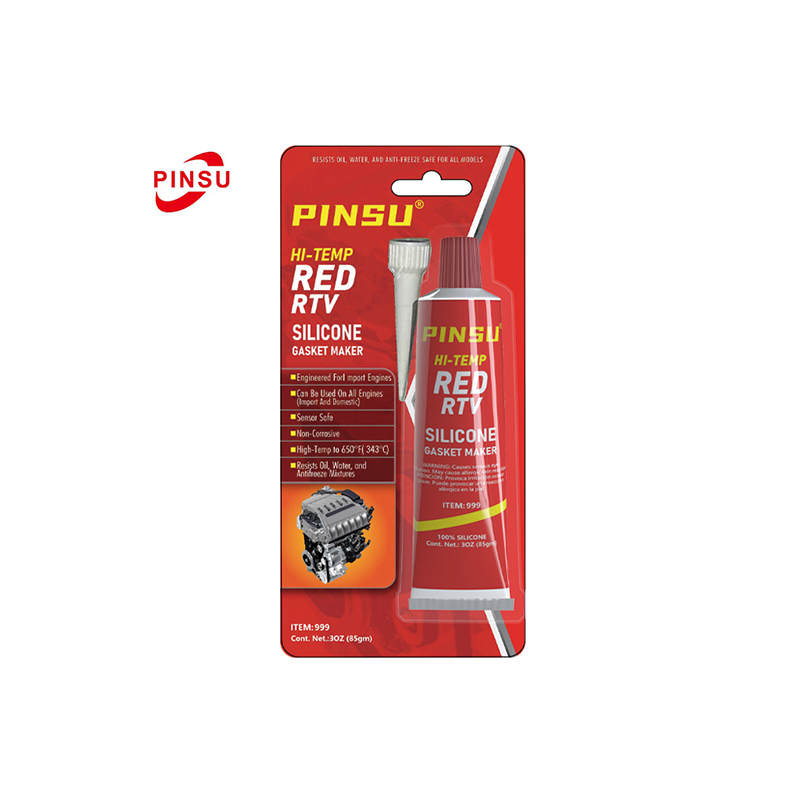
High-temperature sealants can maintain physical and chemical stability in high-temperature environments. Their temperature resistance typically ranges from 250°C to 1200°C, depending on the material and formulation. Common materials include silicone, ceramic-based, and polyimide compounds.
Applications include industrial equipment sealing such as boilers, pipelines, and engines; electronic components like high-temperature circuit boards; and ovens or stoves to ensure door seals and prevent heat loss.
Before use, surfaces must be cleaned of oil and oxidation layers, and ventilation is required during curing to avoid harmful gases. Differences in thermal expansion coefficients between materials should also be considered to ensure proper sealing.
2.2 Waterproof Adhesives
Waterproof adhesives are designed for water and moisture resistance, suitable for long-term immersion or high-humidity environments. Their core function is to form a strong, durable waterproof layer while maintaining elasticity to accommodate minor material movements.
They are commonly used in building waterproofing for roofs, bathrooms, and basements; outdoor facilities such as swimming pools, fountains, and waterproof pipeline connections; and ships and vehicles to prevent water ingress.
Before application, surfaces should be dry and cleaned, and sanding or cleaning agents can improve adhesion. Avoid applying thick layers at once; layered application ensures uniform curing. Compatibility with substrates is crucial for long-term durability.
2.3 Industrial Sealants
Industrial sealants emphasize durability and reliability, suitable for machinery, electronics, and chemical industries. They often meet international standards like ISO and ASTM to ensure stability under high load, vibration, and chemical exposure.
Typical applications include sealing mechanical equipment such as bearings, pumps, and hydraulic systems; protecting electronics like motors, transformers, and control cabinets from dust and moisture; and sealing pipelines and tanks in chemical plants.
Selection criteria include choosing products with appropriate temperature and chemical resistance, considering curing speed for efficiency, and using suitable tools like caulking guns or spray equipment.
2.4 Structural Adhesive Applications
Structural adhesives are high-strength adhesives primarily used in load-bearing or stress-prone areas. They can provide strength comparable to welding or bolting while reducing weight and complexity.
Common materials include metals like aluminum and steel, composites like carbon fiber and fiberglass, and building structures such as curtain walls, window frames, and floor connections.
Surface preparation is critical: smooth, clean, and oil-free surfaces are necessary. Thermal expansion differences between materials must be considered, and curing time and pressure directly affect final strength.
2.5 Silicone Sealant Performance
Silicone sealants offer excellent elasticity, weather resistance, and chemical resistance. They are widely used in construction, automotive, electronics, and aerospace applications.
Key properties include flexibility to accommodate ±25% movement, UV and ozone resistance for long-term outdoor use, and compatibility with multiple substrates including glass, metal, ceramics, and plastics.
Applications include curtain walls, windows, and door seals in buildings; windshield bonding and waterproofing in automobiles; and moisture protection for electronic components and pipelines.
3. Key Factors in Selecting High-performance Sealants/Adhesives
Selecting the right high-performance sealant or adhesive is not merely about brand or price. Environmental conditions, material characteristics, and usage requirements must all be considered. Environmental conditions directly affect performance. High-temperature equipment will cause ordinary sealants to crack or flow, whereas high-temperature sealants maintain elasticity and stability. In wet environments, only waterproof adhesives can ensure effective sealing.
Material compatibility is another critical factor. Different substrates react differently with adhesives, and incompatible combinations may cause debonding, cracking, or corrosion. For example, silicone sealants work well on glass, metals, and ceramics but may not adhere firmly to certain plastics. Structural adhesives in load-bearing areas must have sufficient strength to ensure safety.
Other considerations include curing time, ease of application, and maintenance cost. High-performance sealants/adhesives may cure at room temperature, require heating, or use two-component chemical curing. Construction efficiency and safety should guide the choice. Lifespan and durability impact maintenance costs; UV-resistant and chemically resistant products reduce maintenance frequency and extend service life.
4. Usage Techniques and Common Issues
Even with excellent products, improper application can lead to sealing failures. Proper surface preparation is essential, including cleaning, drying, and removing contaminants. Some sealants require primers or adhesion promoters to improve bonding. Different materials have different preparation requirements.
Application methods influence performance. Apply high-performance sealants evenly to avoid bubbles or voids, which can reduce strength. Structural adhesives often require pressure during curing to ensure complete contact and strong bonding. For multi-layer applications, allow each layer to cure before applying the next.
Common issues include cracking, debonding, sagging, and discoloration. Cracks are caused by thermal expansion or rapid curing; debonding can result from surface contamination or incompatibility; sagging occurs from over-application or low viscosity; discoloration may be caused by UV or chemicals. Solutions include optimizing construction techniques, selecting suitable sealant types, controlling curing conditions, and periodic maintenance.
Experienced engineers note that understanding the working characteristics of high-performance sealants/adhesives is more important than pursuing maximum strength. High-temperature sealants may cure quickly in hot environments; low temperatures may require preheating or adjusting formulations. In high-humidity conditions, waterproof adhesives should be applied in layers to ensure uniform curing. Knowledge of product characteristics maximizes performance and minimizes maintenance.
5. Future Trends
With technological advances, High-performance Sealants/Adhesives continue to improve in performance and move towards multifunctionality and environmental sustainability. Material science advances have produced products with higher strength, wider temperature tolerance, and longer lifespan. Nanomaterials and polymer composites enhance elasticity and chemical resistance for harsh industrial environments.
Sustainability trends are evident in low-VOC or solvent-free sealants, meeting industrial demands while reducing environmental and health impacts. Smart and digital construction may allow real-time monitoring of curing, stress distribution, and lifespan, supporting design and maintenance decisions.
As composite materials, lightweight buildings, and new energy vehicles develop, higher requirements emerge: stronger structural bonding, better waterproofing and corrosion resistance, and longer service life. Designers and installers must keep pace with new sealant technologies to maintain quality and safety.
In summary, high-performance sealants/adhesives are not just bonding materials—they are functional materials essential for modern industrial, construction, and home systems. Scientific selection, proper application, and technological innovation allow them to provide long-term reliable performance in complex environments, supporting safety, durability, and efficiency.
Conclusion
High-performance Sealants/Adhesives are vital in modern engineering. They enhance material and structural durability and play a key role in waterproofing, high-temperature resistance, industrial sealing, and structural bonding. By selecting the right type, mastering application techniques, and considering future technology trends, users can fully leverage their advantages to achieve safe, durable, and efficient engineering solutions.
In the future, as materials technology and sustainability concepts advance, high-performance sealants/adhesives will not merely serve as bonding or sealing materials but will become integral components of smart, sustainable engineering. Understanding their characteristics, applications, and usage techniques helps engineers, designers, and installers make optimal choices and improve project quality and user experience.

 TOP
TOP