
 ENG
ENG
 English
 中文简体
中文简体 русский
 Español
 عربى
عربى
Why Vibration Keeps Loosening Metal Bolts on Working Equipment
A gearbox passes commissioning without any problem, and a few weeks later a guard bracket starts rattling. When the maintenance crew checks the joint, they find three bolts backed out by a few turns and a thin film of oil creeping along the threads. Nothing failed dramatically, but the clamp load that held the assembly together has quietly disappeared. This pattern is common across pumps, compressors, conveyors, presses, and generator sets, and it is one of the most frequent reasons for unplanned stoppages in plants that run heavy rotating equipment.
Loosening rarely comes from a single cause. In most industrial joints, three forces work together. Vibration from rotating shafts and reciprocating parts creates tiny relative movements between the bolt and the nut or between the threads themselves. Thermal cycling makes the metal expand and contract, which reduces the preload each time the equipment starts and stops. Dynamic loads from pressure pulses or impacts push the joint in ways that a static torque value never anticipated.
3
Main drivers of bolt loosening in most rotating machinery: vibration, thermal cycling, and dynamic load
Thousands
Vibration cycles per minute on many running machines, enough to back out an unlocked fastener over time
1 joint
A single loose fastener can cause leaks, misalignment, or fatigue damage in neighboring parts
Maintenance teams that track repeat failures usually find the same root cause: the threads were tightened correctly once, but nothing was designed to keep them tight afterward.
Traditional fixes such as spring lock washers, serrated flange nuts, and nylon insert nuts help in some cases, but each has limits. Spring washers can flatten under load and lose their bite. Nylon inserts lose friction when temperatures rise. Safety wire is labor intensive and depends on the technician. A thread locking adhesive addresses the problem from a different angle, because it fills the microscopic clearance between the male and female threads and hardens into a solid layer that resists both rotation and loosening. This is why many engineering teams now specify a liquid thread locker as a standard step in their assembly procedures.
What Is Anaerobic Thread Locker and How Does It Cure
An anaerobic thread locker is a single component liquid adhesive that stays fluid while it is exposed to air and cures only when it is confined between metal surfaces with no oxygen present. The name refers to this behavior. Anaerobic means the chemistry works without air, and the adhesive is designed to remain stable in a bottle or on a bench for a long time, then solidify quickly once it is sealed inside a threaded joint.
How the cure works in practice
The cure depends on two conditions that exist inside a tightened metal thread but not on the outside surface. The first is the absence of oxygen, which is pushed out of the thin gap as the bolt is engaged. The second is contact with active metal surfaces, which act as a catalyst and speed up the hardening. Steel, cast iron, and many copper alloys work well in this role. Once both conditions are satisfied, the liquid converts into a tough thermoset film that fills the gaps between the threads and bonds them together.
In a typical industrial application, the initial set happens within a short period at room temperature, while full strength develops over a longer window. The exact timing depends on the grade, the metal, the film thickness, and the ambient temperature. Engineers should read the product data sheet for the specific times rather than relying on general rules, but the overall sequence is the same for nearly every product in this category.
What sets it apart from general adhesives
General purpose glues and instant adhesives are designed to bond surfaces that are exposed to air. They form a film at the surface and often remain brittle. A thread locker behaves differently because it is meant to stay in the gap between two parts and remain slightly flexible after curing. It does not form a rigid block. Instead, it creates a controlled bond that resists movement while still allowing the joint to be taken apart later with the right method. This balance between holding and releasing is the key reason it is used on fasteners rather than structural parts.
How the cured film protects the joint
After curing, the film does two jobs at once. It locks the threads so that the nut cannot rotate back under vibration, and it seals the spiral path that liquids and gases would otherwise follow. Because the adhesive fills the thread clearance, moisture, coolant, and oil have a much harder time reaching the metal surfaces where corrosion starts. This is why the same product is often described as both a locker and a sealant, depending on the application.
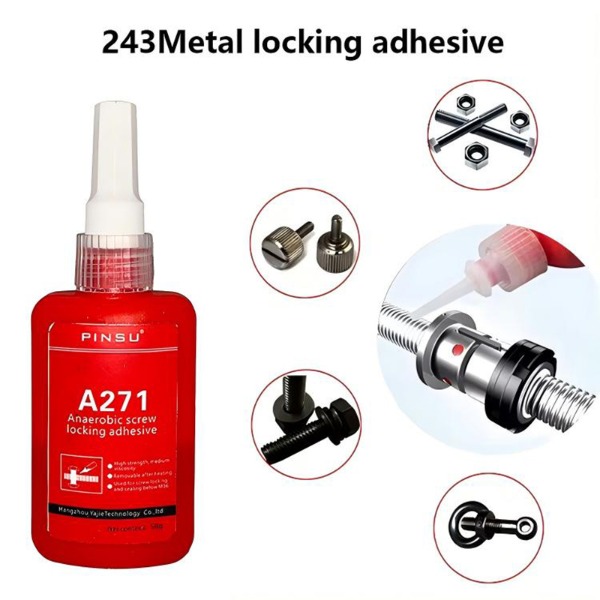
Core Benefits of Thread Locking Adhesive for Industrial Use
When engineers compare locking methods, they usually look at four factors: vibration resistance, sealing performance, the ability to reuse the fastener, and how well the joint keeps its clamp load over time. The table below summarizes how a liquid anaerobic system compares with the most common mechanical alternatives.
| Locking Method | Vibration Resistance | Leak Sealing | Reusability | Clamp Retention |
|---|---|---|---|---|
| Spring lock washer | Low to moderate | None | High | Declines over time |
| Nylon insert nut | Moderate | Limited | Moderate | Declines with heat |
| Anaerobic thread locker | High | Yes | Depends on grade | Stable under load |
The practical benefits for plant operations can be grouped into five areas.
- Anti-vibration performance: The cured film absorbs micro movements between threads, which prevents the gradual rotation that causes loosening on pumps, motors, and gearboxes.
- Leakage and corrosion prevention: Filling the thread clearance blocks oil, water, and process fluids from creeping along the thread path and attacking the metal.
- Stable preload: Because the adhesive does not fatigue like a spring element, the joint keeps its designed clamp force for a longer service interval.
- Grade-based disassembly: Different strength grades allow maintenance teams to match the removal method to the expected service life of the joint.
- Lower total cost: Fewer unplanned stoppages, fewer replacement fasteners, and less time spent re-tightening loose parts usually outweigh the small cost of the adhesive itself.
In many plant maintenance reviews, the savings show up less in the purchase price and more in reduced downtime. A single avoided stoppage on a production line can cover the adhesive cost for an entire year of maintenance on several machines.
Common Application Scenarios of Metal Thread Sealant
Choosing a product is easier when the application is clear. A metal thread sealant is most useful in joints where two requirements meet: the fastener must not back out, and the thread path must not allow fluid to escape. The following scenarios are the most frequent in industrial work.
Machinery and equipment assembly
Machine tools, pump bodies, and gearboxes contain many bolts that see continuous vibration. Locking these fasteners with adhesive reduces the need for frequent re-torque checks and helps maintain alignment between shafts, bearings, and housings. On pump housings, the same film also blocks seepage along the threads that would otherwise require gasket replacement.
Automotive and transportation parts
Chassis components, engine mounts, and exhaust brackets face a combination of road vibration, heat, and moisture. Anaerobic locking is widely used in these areas because the cured film keeps working through repeated heating and cooling cycles and resists road salt and washing chemicals. Service teams often apply it during assembly rather than relying on re-tightening at a later interval.
Hydraulic and pneumatic systems
Threaded connections in hydraulic lines and fittings are a classic leak point. Applying a sealing grade to the male thread helps close the spiral path where hydraulic oil or compressed air would otherwise escape. Teams should confirm that the chosen product is compatible with the fluid and operating pressure listed in the system specification.
Heavy-duty industrial equipment
Generator sets, crushers, and mill drives combine heavy loads with large temperature swings. In these machines, high strength grades are often selected for structural fasteners that must never loosen during the service life of the unit. Removal is planned as a maintenance event that includes heating the assembly to the required temperature before disassembly.
Maintenance and repair work
Field repairs often involve worn threads, previously damaged bolt holes, or fasteners that have already loosened once. In these cases, a thread locker can help restore the joint by filling small irregularities and creating a new locked connection. Technicians should clean the threads thoroughly before applying the adhesive, because contamination is the most common reason repairs fail.
- Machinery assembly lines and gearbox service
- Automotive chassis, engine, and exhaust fasteners
- Hydraulic fittings and pneumatic connections
- Heavy equipment, generator sets, and crushers
- On-site repair and preventive maintenance
How to Choose the Right Anaerobic Thread Locker Grade
Grade selection is where many purchasing decisions go wrong. A product that locks very strongly may be unnecessary for a fastener that needs to be removed every few months, while a weak grade may fail on a joint that sees constant vibration. The right choice depends on the strength you need, the way the joint will be serviced, and the operating conditions it will face.
Three strength levels
| Grade | Typical Use | Disassembly Method | Best Fit |
|---|---|---|---|
| Low strength | Small screws and adjustment points | Hand tools | Frequent inspection |
| Medium strength | General machinery fasteners | Standard tools | Routine maintenance |
| High strength | Permanent structural joints | Heat assisted removal | Heavy vibration |
Low strength grade
Low strength products suit small screws, adjustment screws, and fasteners that are opened regularly for inspection. They keep the screw from drifting while still allowing removal with a hand tool. Because they are easy to release, they are a good choice where the maintenance schedule is short and the vibration level is moderate.
Medium strength grade
Medium strength is the general purpose choice for most machinery. It holds firmly under typical vibration and can be removed with standard hand or power tools when service is needed. Many plants use this grade as their default for bolts on motors, pumps, and conveyor frames, reserving the stronger grade for joints where removal is rare.
High strength grade
High strength products are intended for permanent joints or fasteners that operate in severe vibration. Once cured, they resist rotation far beyond the level of normal tool torque. Disassembly usually requires heating the joint to a specified temperature so that the film softens, followed by careful removal. Planning this step in the maintenance procedure prevents damaged threads and broken tools.
Selection checklist
- Base metal: steel, stainless steel, and cast iron behave differently, so confirm compatibility with the grade.
- Thread size: larger diameters need more adhesive volume, while small threads need a thinner film.
- Service plan: decide whether the fastener will be removed during routine maintenance or left in place for the life of the unit.
- Operating conditions: note the expected temperature range, exposure to oil or water, and the vibration level.
Step-by-Step Usage Guide for Anaerobic Screw Locking Adhesive
A correct application procedure matters as much as the product itself. Most failed joints trace back to skipped preparation rather than to the adhesive. The steps below apply to most liquid thread lockers used in industrial settings.
- Surface preparation: Remove oil, grease, dust, and old adhesive from both the internal and external threads. A clean solvent wipe followed by full drying is the standard approach. Clean surfaces give the film a consistent contact area.
- Apply the adhesive: Place a small amount on the engaged thread area, usually on the external thread of the bolt. Avoid excess, because surplus liquid can migrate into bearings, seals, or electrical areas.
- Assemble the joint: Thread the fastener into place and tighten it to the specified torque. The tightening action pushes air out of the gap and spreads the film evenly across the thread surfaces.
- Allow initial set: Leave the joint undisturbed while the film begins to set. The initial set time varies with the grade and the metal, so check the data sheet for the required period before loading or running the equipment.
- Allow full cure: Full strength develops over a longer window at room temperature. Operating the equipment before full cure can reduce the final holding force, so plan the commissioning schedule accordingly.
Materials that need special attention
Anaerobic systems depend on active metal surfaces. Stainless steel, aluminum, and some coated fasteners can slow the cure, and passive or plated surfaces may need a primer or activator to reach full strength. Plastic threads are not suitable, because the adhesive can attack the material and the joint may not hold as expected.
Common Mistakes That Reduce Locking Performance
Experienced technicians know that most failures come from a small set of repeated errors. Recognizing them early saves time on repairs and protects equipment reliability.
- Applying adhesive to dirty or oily threads, which weakens the bond and leads to early loosening.
- Using too much product, which can cause the film to squeeze out and contaminate nearby surfaces.
- Choosing a high strength grade for a joint that must be removed often, which increases maintenance time and risks damage.
- Tightening after the film has already partly cured, which can crack the film and reduce the locking effect.
- Ignoring the cure window and running the equipment too early, which lowers the final clamp retention.
Good practice is to record the product grade, batch, and cure time on the maintenance card. This makes future inspections faster and helps the team understand which joints need attention during scheduled shutdowns.
Technical Parameters Reference
The following table lists the general parameter categories that engineers typically review when comparing anaerobic thread lockers. Values vary between grades and manufacturers, so the product data sheet should always be the final reference for design work.
| Parameter | Typical Reference | Engineering Note |
|---|---|---|
| Cure type | Anaerobic, metal activated | Requires confined metal contact |
| Appearance | Colored liquid, commonly blue, red, or green | Color helps identify grade in the field |
| Thread size range | Small to large diameter fasteners | Match film viscosity to thread size |
| Operating temperature | Wide range, typically from below freezing to about 150 degrees Celsius | Confirm the limit for high strength grades |
| Initial set time | Minutes to a short period | Varies with grade and metal |
| Full cure time | Several hours to about one day | Plan commissioning after full cure |
| Breakaway torque | Low grade with hand tools, high grade needs heat | Use data sheet values for design |
| Storage | Cool, dry place away from direct sunlight | Keep the bottle sealed when not in use |
Frequently Asked Questions About Anaerobic Thread Lockers
The questions below cover the points that engineers and maintenance teams raise most often when they first evaluate a thread locking product.
Q1: What is the difference between a thread locker and a thread sealant?
A thread locker focuses on preventing the fastener from rotating loose under vibration. A thread sealant focuses on blocking fluid and gas from passing along the thread path. Many anaerobic products do both, so the choice depends on which requirement is more important for the joint.
Q2: Can a high strength anaerobic thread locker be removed?
Yes, but removal usually requires heating the joint to the temperature specified in the data sheet. Once the film softens, the fastener can be turned with standard tools. Planning this step in the maintenance procedure avoids damaged threads.
Q3: Does anaerobic thread locking adhesive work on stainless steel?
Stainless steel can cure, but it is less active than plain carbon steel, so the cure may be slower. Some applications use a primer or activator to reach full strength. Always test on the actual material before production use.
Q4: Is screw locking glue resistant to oil and high temperature?
Cured anaerobic films resist most industrial oils and perform well across a wide temperature range. The exact limit depends on the grade, so compare the operating temperature in the data sheet with the conditions in your equipment.
Q5: Can anaerobic adhesive be used on plastic threads?
It is not recommended. Anaerobic systems are designed for metal surfaces that activate the cure, and some plastics can be attacked by the chemistry or fail to bond properly. For plastic components, select a product specifically rated for those materials.

 TOP
TOP