
 ENG
ENG
 English
 中文简体
中文简体 русский
 Español
 عربى
عربى
A valve cover gasket sealed on Monday can cost an oxygen sensor by Friday. The pattern appears often enough in automotive repair that experienced technicians treat generic room-temperature-vulcanizing (RTV) silicone with suspicion anywhere near an engine's breathing path, and the suspicion is chemically justified. The same material bonds well on a building facade without harming anything; the difference is not the sealant but the environment around it.
The short answer to the question is a chain of events: curing silicone gives off volatile silicon-containing compounds, the engine ingests them, combustion converts the silicon into silicon dioxide, and that white glaze coats the oxygen sensor until it can no longer compare exhaust gas with clean reference air. Tracing the full chain from bead to breakdown also yields a practical rule set for choosing and applying sealants safely.
How an Oxygen Sensor Works in the First Place
An oxygen sensor is a small electrochemical comparator. Its tip sits in the exhaust stream behind a slotted protection tube, and a zirconia ceramic element plated with platinum electrodes generates a voltage from the difference between residual oxygen in the exhaust and oxygen in fresh reference air. That reference air enters through a vent in the sensor body, near the connector end, well away from the hot tip.
The control unit reads the resulting signal, which swings between roughly 0.1 and 0.9 volts on a conventional narrowband sensor, and trims injector pulse width to hold the mixture near equilibrium. Wideband sensors add a pump cell to measure the exact air-fuel ratio, yet they remain just as dependent on a clean reference side and clean electrodes. Both designs share one quiet assumption: nothing interferes with the comparison the element was built to make.
The reference air supply is deliberately tiny. Only a slow drift of atmosphere through the vent is required, which is why even a thin film of dust, oil, or silicone-derived deposit can shift the reading. The sensor was never designed to tolerate contamination; it was designed to face nothing but exhaust gas.
Silica attacks the sensor at both of its most sensitive points: the reference air vent and the platinum sensing surfaces.
The Chemistry That Turns Sealant Into Sensor Poison
What curing releases
RTV silicone cures by reacting with ambient moisture. Acetoxy formulations, the familiar fast-curing types with a vinegar smell, release acetic acid as they cure. Neutral formulations release ketoximes or alcohols instead, which is why they are gentler on metals and electronics. Every silicone rubber, whatever its cure system, also emits small quantities of volatile cyclic siloxanes, low-molecular-weight silicon compounds that evaporate freely during the first days of cure.
Why trace amounts are enough
The quantities sound trivial, and that is what makes the failure counterintuitive. Siloxane vapor from a curing bead amounts to fractions of a gram, yet an oxygen sensor responds to differences far smaller than anything visible. Because an engine recirculates its internal air continuously, each small dose of vapor lands on the same hot surface instead of dispersing. Trace exposure repeated over drive cycles behaves like a slow-drip contaminant.
From vapor to white glaze
Vapors become a sensor problem only when the engine ingests them. Carried through crankcase ventilation, a leaking intake path, or simply off-gassed inside a confined engine bay, siloxanes reach the combustion chamber. Exhaust temperatures of several hundred degrees Celsius strip the organic fraction away and leave silicon behind as silicon dioxide, an abrasive white powder that rides the gas flow downstream.
Industry inspection guides describe the outcome precisely: a white, powdery coating on the protection tube that alters or blocks reference air, followed by sluggish switching and skewed fuel trim within one to two days of sustained operation. Once deposited at exhaust temperature, the glaze sinters onto the element and will not wash off.
The cure chemistry printed on the cartridge is the best single predictor of sensor risk:
| Sealant type | Byproduct while curing | Typical use | Oxygen sensor risk |
|---|---|---|---|
| Acetoxy RTV | Acetic acid plus siloxanes | Glazing and general construction | High, never sensor-safe |
| Standard neutral RTV | Ketoximes or alcohols | Industrial gasketing | Low to moderate, verify volatility |
| Sensor-safe neutral RTV | Low-volatility neutral byproducts | Automotive and industrial flanges | Low, engineered for sensor-equipped engines |
| Anaerobic sealant | None, silicone-free | Rigid machined metal joints | Minimal |
Symptoms of a Silicone-Poisoned Sensor
Contamination produces a recognizable cluster of complaints rather than one isolated code:
- A white or light-gray powdery film on the protection tube, visible once the sensor is removed
- Lazy switching: the signal crosses its threshold slowly enough to trigger codes for insufficient or slow response
- Fuel trims pinned at their correction limits, often enriching after prolonged contamination, with matching driveability complaints
- A sensor that reads plausibly at idle but freezes under load as deposits load the element
- Failure timing that tracks recent gasket or sealant work, the most telling clue on the entire list
0.1-0.9 VNormal switching band of a healthy narrowband sensor
24-48 hoursReported window for a contaminated sensor to fail after exposure
White powderThe visual fingerprint of silica on the protection tube
Timing separates poisoning from ordinary wear. A contaminated unit commonly misbehaves within 24 to 48 hours of the first restart after a sealant job, far faster than natural aging, which takes months or years. When a freshly installed sensor also fails quickly, the vapor source is still live and must be found before a third sensor goes in.
The complaints often masquerade as other faults. Shops have chased mass airflow readings, replaced catalytic converters, and reprogrammed control units before a removed sensor revealed the white film that identified silicone as the source. A failed emissions test with stubbornly rich trims is another common first symptom, because a glazed sensor under-reports oxygen and the control unit enriches the mixture toward a target that was never real.
Treat a fast-failing oxygen sensor as a symptom first and a part second. Replacing the sensor without removing the vapor source simply schedules the next failure.
How Silicone Vapors Actually Reach the Sensor
Most poisoned sensors never sat near the sealant. The delivery routes matter more than physical proximity:
- Exhaust-side work: sealant squeezed past a manifold or collector gasket sits directly in the gas stream ahead of the sensor
- Crankcase path: beads inside valve covers, oil pans, timing covers, or around dipstick tubes evaporate into blow-by gases and ride the PCV system into the intake
- Intake-side work: throttle body, plenum, and vacuum repairs place curing sealant directly in the airflow the engine consumes
- Shop air: silicone sprays, dressings, and contaminated anti-seize compounds release siloxanes that a running engine can inhale from the surrounding air
Heat multiplies every route. A bead curing near a hot exhaust manifold or inside a warm crankcase releases far more volatile material than the same bead curing on a bench, which is why a modest application in the wrong place can outweigh a careful one in a safe place.
Routing decisions made on the bench interrupt the chain as effectively as product choice. Letting sealed parts cure overnight away from the vehicle, taping breather openings during application, and wiping away excess material before it skins all cut the vapor supply while the bead is at its most volatile stage.
A sealed part curing on the workbench overnight is a solved problem by morning; the same part curing inside a closed engine bay with the PCV system live is an exposure event. Where the curing happens decides whether the vapors ever meet the sensor.
What Sensor-Safe RTV Actually Means
The phrase sensor-safe on an RTV cartridge refers to a formulation standard rather than a marketing mood. Sensor-safe products use neutral cure chemistry, hold volatile content to a low level, and are validated for vehicles fitted with oxygen sensors. Acetoxy glazing sealants, however good their adhesion to glass, never qualify. A cartridge that does not state sensor-safe compatibility should be treated as forbidden material anywhere near an engine's breathing path.
Selection still requires judgment. A high-temperature automotive and industrial grade with low volatility is the right tool for oil pan, timing cover, valve cover, and thermostat housing work on sensor-equipped engines, laid down as a thin, continuous bead. For a deeper comparison of cure systems and temperature ratings, this industrial RTV silicone sealant selection guide is a useful reference before committing a cartridge to a repair.
Technique completes the protection. A sensor-safe formulation applied half a centimeter thick and run hot the same evening still floods the crankcase with uncured byproducts, so the label protects sensors only when the application method respects cure chemistry as well.
Watch the wording on packaging too. Claims about high temperature describe the cured rubber's ability to survive heat, not the vapor it releases while curing. The two properties are separate, and only the second determines what the sensor breathes during the first day after assembly.
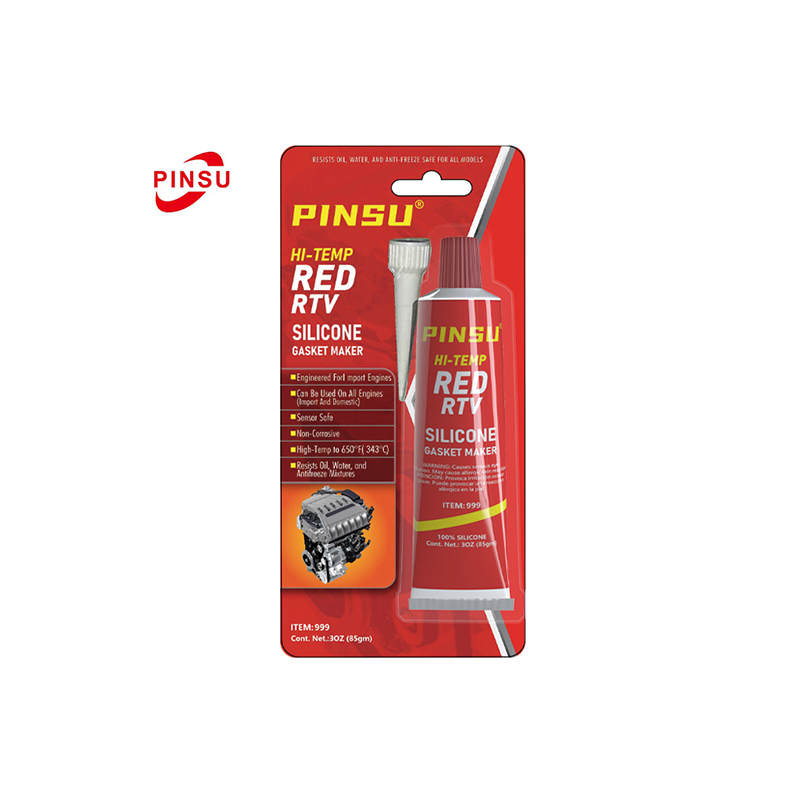
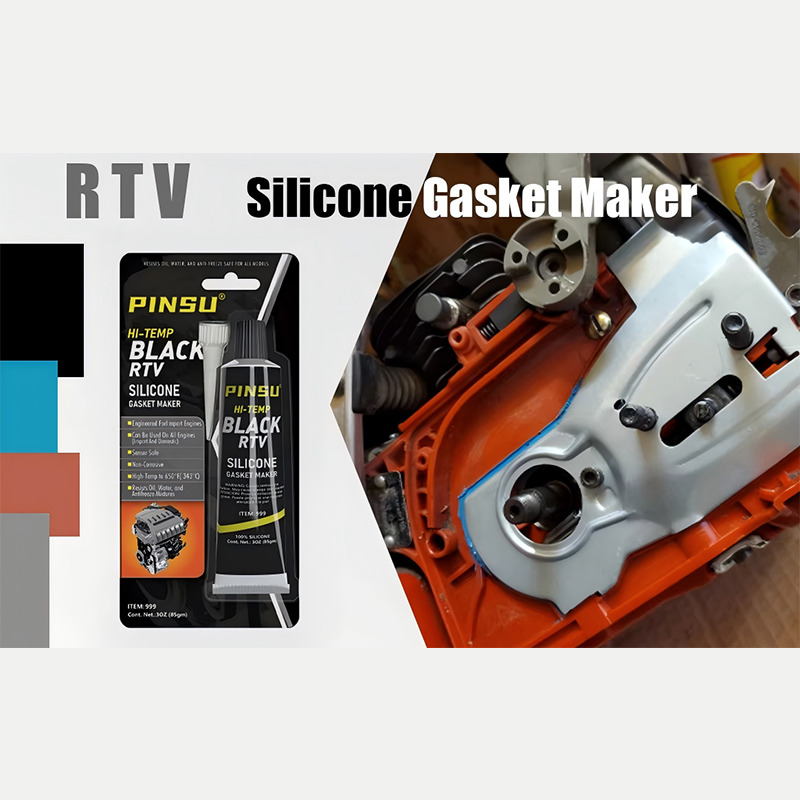 PINSU RTV High-Temperature Silicone Gasket SealantThis one-component RTV silicone seals engine mating surfaces from -50°C to +300°C. Its curing behavior matters here, since vapor released during the first day after assembly, not heat resistance, determines sensor safety.View Product →
Best Practices That Keep Sensors Alive
A short working discipline prevents nearly every silicone-related sensor failure:
- Choose chemistry first: neutral cure, sensor-safe RTV for anything near the intake, exhaust, or crankcase ventilation path, and reserve acetoxy products for glazing and static building joints.
- Apply the thinnest bead that seals. Excess material squeezes into ports and oil galleries, where it cures, cooks, and sheds volatiles for days.
- Respect full cure before the first start. Most automotive RTV needs roughly 24 hours; skin-over after fifteen minutes is not cure.
- Keep sealant out of breather openings, oil fillers, and dipstick tubes, because a bead inside a valve cover is delivered to the intake by the PCV system.
- Clean flanges with non-silicone solvents and lint-free cloths, and keep silicone sprays away from an open intake while the engine runs.
- Prefer alternatives where the joint allows: pre-formed gaskets for extreme temperatures, or a silicone-free anaerobic sealant for rigid machined metal pairs such as gear covers and pump housings.
Understanding how RTV silicone gasket makers enhance sealing and bonding makes it easier to see where they belong and where they do not. The material earns its keep on flexible, low-pressure flanges, not inside an engine's air supply.
For rigid machined joints on industrial assemblies, an anaerobic adhesive formulated for metal sealing and leak prevention delivers the same leak-tight result with no silicon chemistry involved at all.
None of these steps costs more than a few minutes, and together they interrupt every link in the contamination chain: the chemistry, the dose, the cure state, the delivery route, and the fallback option for when silicone should not be present at all.
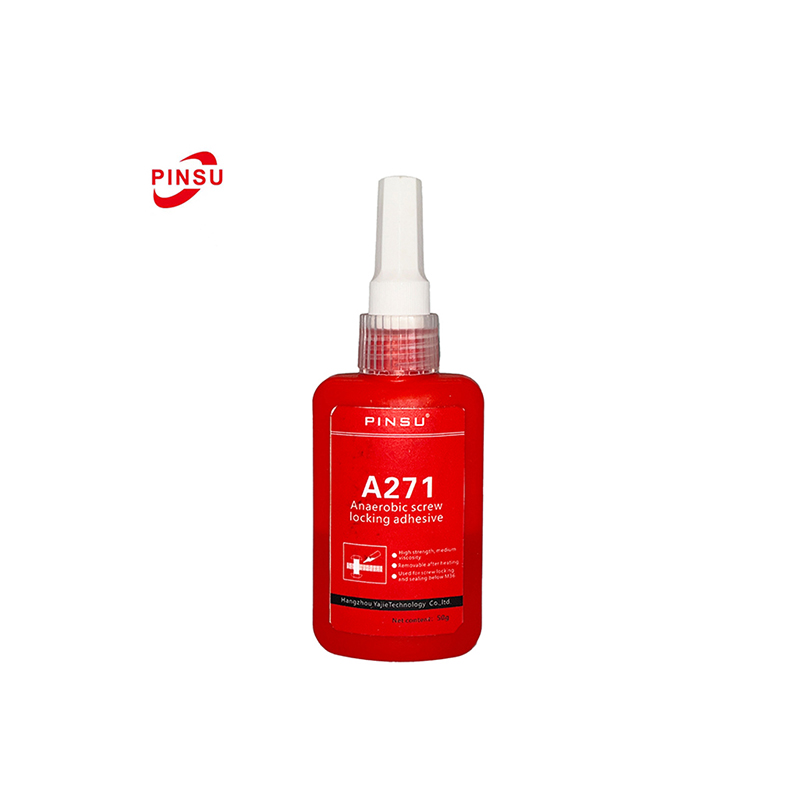
 PINSU A271 Anaerobic Threadlocking and Sealing AdhesiveA271 cures without oxygen between metal threads, locking fasteners and sealing pipe joints against oil and solvents. It serves as the no-silicone fallback when sensor contamination risk makes RTV sealants unsuitable.View Product →
Frequently Asked Questions
Q1: How much RTV silicone does it take to damage an oxygen sensor?
There is no fixed safe dose. Contamination depends on where the bead sits, how thick it is, how much volatile material the formulation releases, and how much airflow carries that vapor into the engine. A single over-thick application near the crankcase ventilation path has been enough to ruin sensors, while a correctly applied sensor-safe bead on the same flange causes none.
Q2: Is every RTV product a threat to oxygen sensors?
No. Neutral cure, low-volatility formulations rated sensor-safe are engineered for exactly this environment. The repeat offenders are acetoxy construction and glazing sealants used out of convenience, along with silicone sprays and dressings applied near a running intake.
Q3: Can a silicone-poisoned oxygen sensor be cleaned and reused?
No. The silica glaze forms and hardens at exhaust temperature, bonding to the element itself. Solvents do not reach it, and mechanical or thermal cleaning attempts damage the ceramic. Replace the sensor and eliminate the vapor source first.
Q4: How long should RTV cure before the engine runs?
Plan on roughly 24 hours for full cure in normal workshop conditions and follow the schedule printed on the product. Starting earlier drives uncured byproducts into the crankcase and exhaust, which is precisely the exposure that poisons sensors.
Q5: What belongs on gaskets near the intake or exhaust?
A thin bead of sensor-safe neutral RTV where flexibility is needed, a pre-formed gasket where temperatures are extreme, or a silicone-free anaerobic sealant on rigid machined flanges. Each option seals the joint without feeding silicon compounds to the combustion chamber.
Q6: Do anti-seize compounds on sensor threads create the same risk?
They can. Compounds containing silicone deposit the same silicon species on the element, so thread treatment should stay limited to what the sensor manufacturer specifies. In most cases the factory coating is sufficient, and adding a silicone-based compound introduces an avoidable contamination source.
RTV silicone is not the enemy of the oxygen sensor; unmanaged cure chemistry is. Choose neutral, low-volatility formulations, apply sparingly, allow a full cure, and keep curing vapors out of everything the engine breathes. Those four habits cost nothing extra at the parts counter and spare the next diagnostic session a familiar white fingerprint.

 TOP
TOP