
 ENG
ENG
 English
 中文简体
中文简体 русский
 Español
 عربى
عربى
Precisely machined flanges leave almost no room for error. The mating faces are flat, rigid and finished to tight tolerances, which is exactly the environment where an anaerobic flange sealant outperforms a conventional gasket. Instead of relying on compression to close a gap, the sealant flows into the microscopic channels between the faces, cures into a hard thermoset resin once air is excluded, and locks two separate components into a single sealed unit. This guide explains how the cure mechanism works, where the practical limits lie, how to prepare and assemble the joint, and how to choose the right grade for production or maintenance work on machined metal flanges.
Why Precision Machined Flanges Need a Different Sealing Logic
A conventional compressed-fiber or elastomer gasket needs one thing above all: a gap deep enough to compress. Precision machined flanges are designed the opposite way. Their faces are cut flat so that metal meets metal, and the residual space between them is measured in fractions of a millimeter. Squeezing a soft gasket into that space creates two problems at once. The clamp load spent on compressing the gasket is no longer clamping the joint, and the gasket itself keeps relaxing and creeping through every thermal cycle it sees.
An anaerobic flange sealant reverses the logic. It is a liquid resin with essentially 100 percent solids content, so nothing evaporates during cure. It penetrates surface irregularities instead of trying to fill a thick gap, then polymerizes in place into a thin, hard, completely filled film. That film adds no compression load, cannot relax over time, and leaves the full bolt load available to stiffen the joint structure.
0.25 mmMaximum gap most flange grades cure reliably
100%Solids content, so the film cures without shrinkage
24 hTypical full cure at room temperature before service
Because the cured film bonds to both faces, the joint also resists micro-movement. Vibration that would gradually work a soft gasket loose is carried through the bonded film instead. The film thickness involved is tiny, often well under a tenth of a cut gasket, which is why surface finish and flatness carry so much weight. For transmission housings, pump covers, gearbox split lines and compressor heads, that difference decides whether a flange stays dry for the life of the machine or starts weeping within months of entering service.
How the Anaerobic Cure Mechanism Works
The name describes the condition: the resin cures in the absence of oxygen. In the bottle or the dispensing line, oxygen diffusing into the liquid keeps the chemistry stable. When the sealant is spread between two metal faces, two things change at the same time. The narrow joint shuts out air, and active metal ions on the flange surfaces accelerate polymerization. Inside the joint the liquid converts into a cross-linked thermoset solid, while the excess bead squeezed past the edge still touches air and remains soft.
Why the Outer Bead Stays Tacky
A tacky bead at the flange edge is not a defect. It is evidence that the material is behaving exactly as designed, and it should simply be wiped away after assembly. When sealant inside the joint also remains soft past the expected cure time, the cause is nearly always one of three factors, and checking them in order resolves most cure complaints in minutes:
- Gap width: cure slows as the film gets thicker; beyond the stated gap range the center of the joint may never solidify fully.
- Substrate activity: iron, steel, copper and aluminum alloys are active; stainless, plated, galvanized and anodized surfaces are passive and need an activator.
- Temperature: cure rate drops sharply in cold shops; joints assembled below roughly 5°C need warmth or a low-temperature grade.
A cured anaerobic film behaves like a gasket that cannot relax: it is bonded to both faces, contains no solvents, and never shrinks away from the load path.
100% solid with no shrinkage O2 in air keeps the outer bead liquid Gap up to 0.25 mm, drawn exaggerated Metal ions on the faces trigger the cure
Gap, Fit and Rigidity: The Practical Limits
Key limitThe first specification to verify is not strength or temperature rating but gap. General-purpose flange grades are formulated to cure reliably in clearances up to approximately 0.25 mm, which covers the fit range of most precision machined metal flanges. Low-viscosity grades excel where faces contact metal to metal, while thixotropic gel grades bridge the upper end of the range without draining off vertical or overhead joints.
Rigidity matters as much as clearance. Anaerobic resin cures to a hard solid, so the design assumption is a joint that does not flex. Long bolt spans, thin stamped covers and plastic spacers introduce movement that can crack a rigid film, and once the film cracks, the leak path opens along the whole flange. When a joint falls outside these limits, the right answer is a different material family rather than a thicker bead.
Match the Method to the Joint
| Joint condition | Main risk | Better-suited approach |
|---|---|---|
| Rigid metal flanges, gap under 0.25 mm | None when prep is clean | Anaerobic flange sealant |
| Gap of 0.25 mm to 1 mm | Slow, incomplete cure deep in the joint | RTV silicone gasket maker |
| Flexing covers or plastic spacers | Rigid film cracks under movement | Elastomeric sealant or formed gasket |
| Frequent scheduled disassembly | High-strength bonds slow teardown | Medium-strength anaerobic grade |
For a wider decision framework across equipment builds and repair work, our guide on whether an anaerobic adhesive is the right choice for your application walks through substrate, gap and service questions step by step.
Surface Preparation: The Step That Decides the Outcome
Anaerobic chemistry is unforgiving toward contamination. Oil films, cutting fluid residue, old gasket fragments and rust each block something the cure depends on, either metal contact or metal-ion activation. Careful preparation takes minutes, and it decides the result long before the sealant is opened.
Field procedureThe following sequence covers most machined flange joints:
- Degrease both faces with a fast-evaporating cleaner and allow them to flash off completely before assembly.
- Strip every trace of previous gaskets and cured sealant with a plastic scraper and an abrasive pad; hardened residue creates a direct leak path.
- Check the finish. A standard machined texture keys the resin mechanically, while polished or lapped faces cure poorly without extra activation.
- Identify passive substrates. Stainless steel, plated and galvanized surfaces, and anodized aluminum all need an activator or primer to reach full cure.
- Inspect for damage. Scoring, pitting and dents beyond the gap rating of the sealant must be corrected before the parts go together.
Damaged faces do not automatically scrap the housing. A metal-filled epoxy putty can rebuild flatness across nicks and pitted patches, provided the repair is fully cured, dressed flush and degreased before the flange sealant is applied.
 PINSU Epoxy AB Putty Repair StickA two-component epoxy stick that cures at room temperature with high strength and chemical resistance. It suits rebuilding nicked or pitted flange faces flat before sealant is applied.View Product →
Application Technique: From Bead to Bolt Torque
Application is simple once the joint is prepared, but a few habits separate flanges that stay dry for years from flanges that weep within weeks:
- Lay a continuous bead along the bolt-hole line on the face of the part that is handled first; any break in the bead becomes a leak path.
- Keep the bead on the fluid side of the bolt circle so internal pressure works it into the joint instead of pushing it out.
- Assemble within the open time stated on the data sheet; dragging or repositioning after the bead skins tears the film.
- Torque the bolts in a crisscross sequence, in stages, to the specified clamp load so the film spreads evenly across both faces.
- Let the joint cure fully before pressurizing. Most grades reach service strength within a few hours and complete cure in about 24 hours at room temperature.
In series production, stencil printing, roller coating or automated dispensing keeps film thickness consistent from part to part. Consistency matters because cure time and final strength both scale with film thickness, and an over-thick bead is the most common cause of slow cures and wasted material on high-volume assembly lines. On rework jobs the same discipline applies with simpler tools: apply by hand, keep the bead unbroken, and resist the temptation to close the joint early.
Selecting Viscosity and Strength Grade
Flange sealants are specified by viscosity, strength class and service rating rather than by one universal grade. Viscosity controls how the material migrates through the fit and whether it stays in place on vertical faces, while strength decides whether the joint can ever be serviced. Manufacturers usually publish the full spread of grades in their industrial anaerobic adhesive range so engineers can match each joint individually.
What to Define Before Ordering
| Selection factor | What to define before ordering |
|---|---|
| Viscosity and gap | Lowest-viscosity grade that fills the measured clearance and stays in place on vertical faces |
| Strength class | Medium for serviceable joints, high strength for permanent housing seals |
| Temperature range | Peak and continuous service values, plus the coldest cure temperature on the line |
| Chemical exposure | Oils, coolants and fuels in actual service, not just generic compatibility charts |
| Cure speed | Fixture time that the production takt or maintenance window allows |
As a benchmark, an industrial-grade medium-strength formulation covers most production and maintenance work on machined metal flanges. Testing on the actual joint, at the coldest expected shop temperature, remains the only result that counts. The specification below is representative of the class to shortlist:
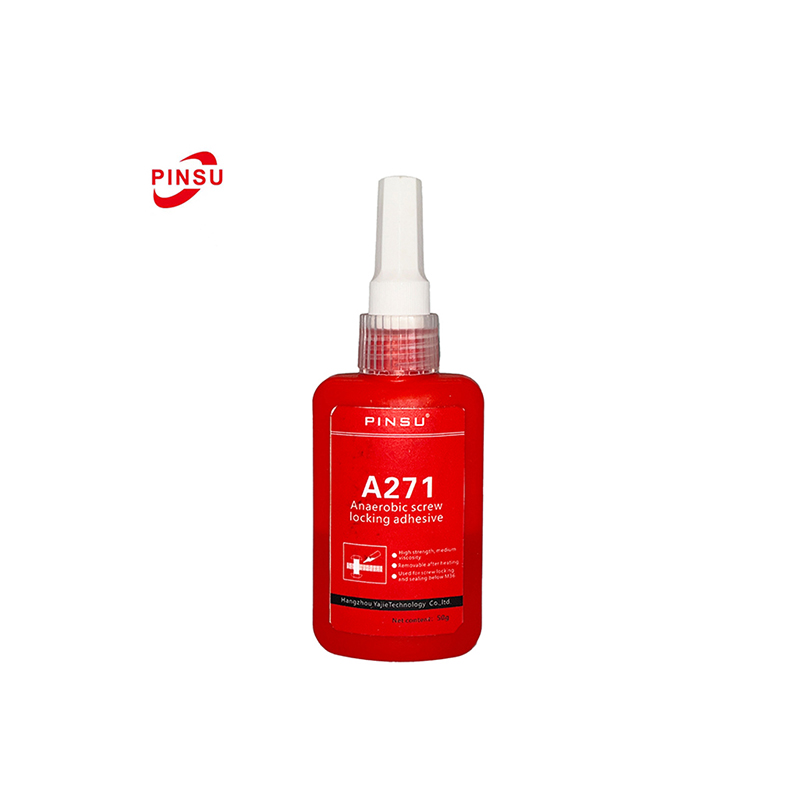
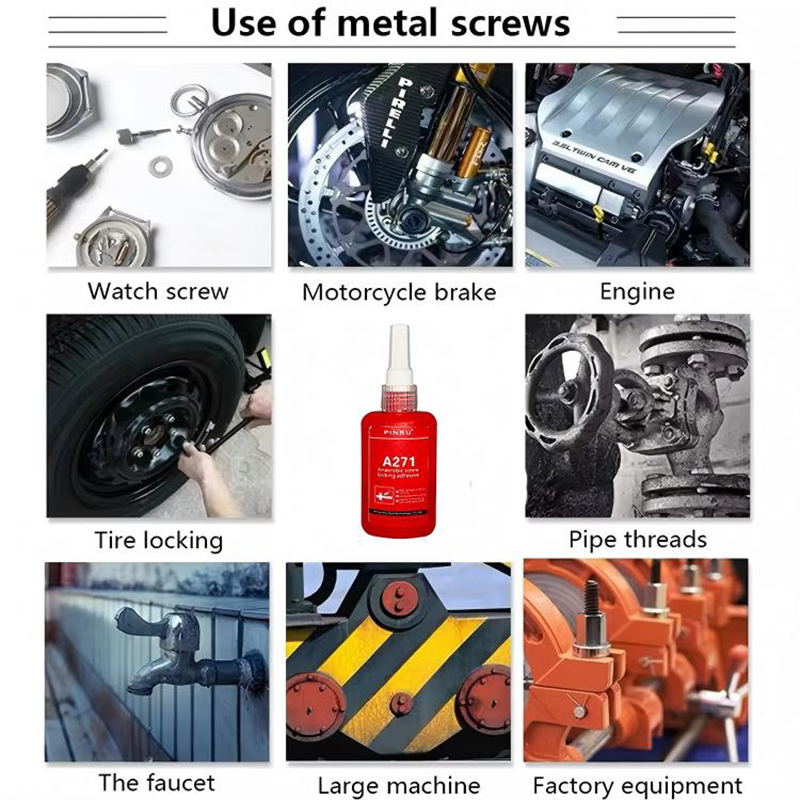 PINSU-A271 Industrial Anaerobic Metal SealantA medium-strength, one-component anaerobic adhesive that seals machined metal flanges against liquid and gas leaks, cures at room temperature, and resists oil, water, and solvents.View Product →
When Anaerobic Is the Wrong Tool
Honest material selection includes knowing when to step away from anaerobic chemistry. Three joint conditions call for a different approach:
- Gaps beyond the rating: warped castings and unmachined faces leave voids the resin cannot bridge, and cure deep in the joint stays incomplete.
- Moving joints: elastomer spacers, plastic covers and long unsupported spans flex enough to crack a rigid cured film.
- Extreme service: continuous temperatures above the product rating or permanent immersion in aggressive chemicals exceeds what the cured resin tolerates.
A room-temperature-vulcanizing silicone gasket maker is the natural complement. It cures elastomeric, tolerates larger gaps and joint movement, and holds higher continuous temperatures in engine sumps, valve covers and gearbox housings where a rigid film would be the wrong engineering choice. Matching the material family to the joint condition costs nothing at the design stage and prevents the most expensive class of field failures.
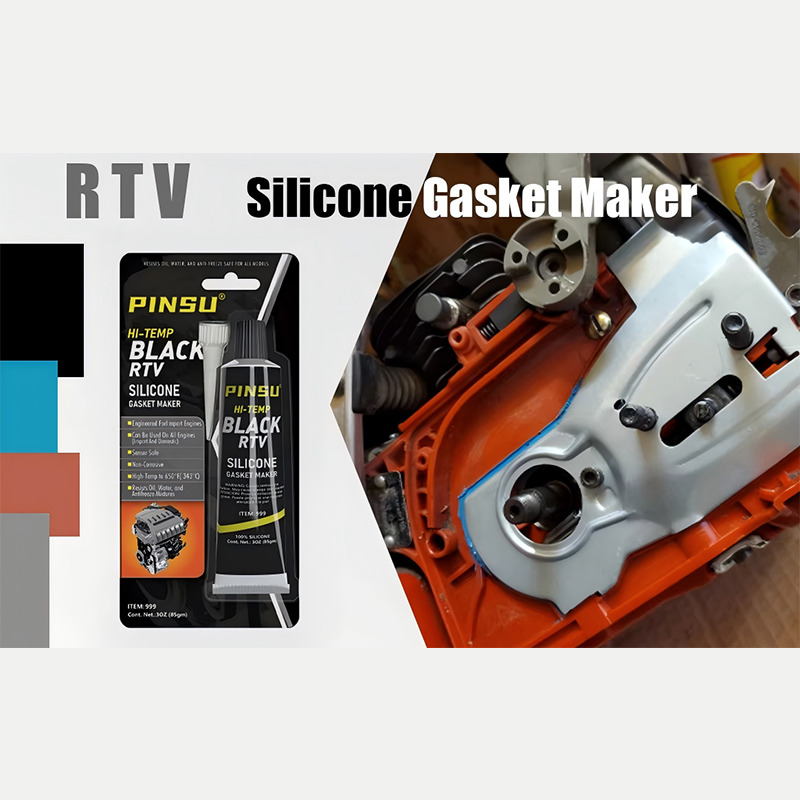 PINSU RTV High Temperature Silicone Gasket MakerThis one-component RTV silicone cures elastomeric, fills larger gaps, and withstands -50°C to +300°C, making it ideal for engine sumps, valve covers, and gearbox housings with joint movement.View Product →
Common Failure Modes and How to Avoid Them
When a machined flange weeps, the cause is usually in the joint rather than in the chemistry. Five patterns account for most complaints:
- Soft sealant deep in the joint: gap beyond the rated range, passive metal left unactivated, or parts assembled below the minimum cure temperature.
- Immediate leaks: a broken bead, missing sealant around fastener holes, or bolts pulled to final torque before the film could spread.
- Delayed leaks: under-torqued bolts allowing micro-movement, or faces recontaminated by fingerprints after cleaning.
- Slow production cures: over-thick beads, cold parts straight from an unheated store, or inactive alloys assembled without primer.
- Difficult teardown: a high-strength grade specified where a medium-strength, serviceable grade would have been enough.
A short joint audit covering gap, substrate, cleanliness, temperature and required disassembly resolves the majority of field failures before anyone reaches for a different product. Once these checks are written into the standard work instruction, they take seconds and prevent repeat complaints. The same audit doubles as an acceptance checklist for incoming sealant batches and storage conditions.
Frequently Asked Questions
Q1: What is the maximum gap an anaerobic flange sealant can fill?
Most general-purpose flange grades cure reliably in gaps up to about 0.25 mm. Beyond that range, cure slows sharply and the resin deep in the joint may stay liquid. Larger clearances call for a thixotropic gel grade at most, and more often for an elastomeric gasket maker instead.
Q2: Why is the sealant outside the joint still tacky after cure?
Oxygen keeps the exposed resin liquid. The material is designed to cure only where air is excluded, so a tacky outer bead is normal and confirms the chemistry is active. Wipe it away after assembly; once the joint is closed it serves no function.
Q3: Do stainless steel and other passive metals need an activator?
Yes. Stainless steel, plated and galvanized surfaces, anodized aluminum and similar passive substrates release too few metal ions to drive the cure at full speed. A surface activator or primer applied to both faces restores normal cure times and full strength.
Q4: How long should I wait before pressurizing the joint?
Treat the technical data sheet as the controlling document. As a general rule, flange joints reach handling strength within a few hours at room temperature and full pressure and chemical resistance after about 24 hours. Cold workshops extend these times considerably.
Q5: Can an anaerobic sealant fully replace a conventional gasket?
On rigid, precision machined metal flanges within the gap rating, yes, and the sealed joint is often more reliable because it cannot relax or creep. Where faces are soft, warped, unmachined or deliberately flexing, an elastomeric gasket material or a conventional cut gasket remains the better engineering choice.

 TOP
TOP